



HONOLULU — Hawaiʻi is moving closer to imposing tougher rules on electric bikes and other battery-powered rideables after state lawmakers approved a bill aimed at improving safety, especially for children and teenagers, amid a sharp rise in crashes and serious injuries.
If signed into law by Gov. Josh Green, the measure would introduce clearer statewide standards for what qualifies as an e-bike, require helmets for riders under 18, restrict younger riders from using faster classes of e-bikes without adult supervision, and outlaw dangerous behavior such as wheelies and stunt riding on public streets.
The legislation comes as state and city officials report a troubling increase in e-bike-related injuries over the past several years. According to health and emergency response data cited by local officials, e-bike injuries in Hawaiʻi have more than doubled since 2022. In Honolulu, emergency responders have also seen a steady rise in cases, with many involving minors and many riders not wearing helmets.
Supporters of the bill say the goal is not to discourage e-bike use, but to separate lower-speed electric bicycles from far more powerful machines that have increasingly appeared on public roads, sidewalks and bike lanes. Under the proposal, an e-bike would be defined as a bicycle with fully operable pedals and an electric motor of no more than 750 watts. The bill would also formally adopt the three-class system widely used across the mainland United States.
Under that framework, Class 1 e-bikes provide motor assistance only while pedaling and stop assisting at 20 mph. Class 2 models can use throttle-powered assistance without pedaling, but also top out at 20 mph. Class 3 e-bikes can travel up to 28 mph and must be equipped with a speedometer.
Devices that exceed those limits would no longer be treated like ordinary e-bikes. Instead, the measure would classify them separately as high-speed electric devices. That distinction is significant because those faster, more powerful machines would face much tighter restrictions on where they can be used. Supporters say the change is designed to address growing concern over electric dirt bikes and similar vehicles being ridden in spaces intended for bicycles or pedestrians.
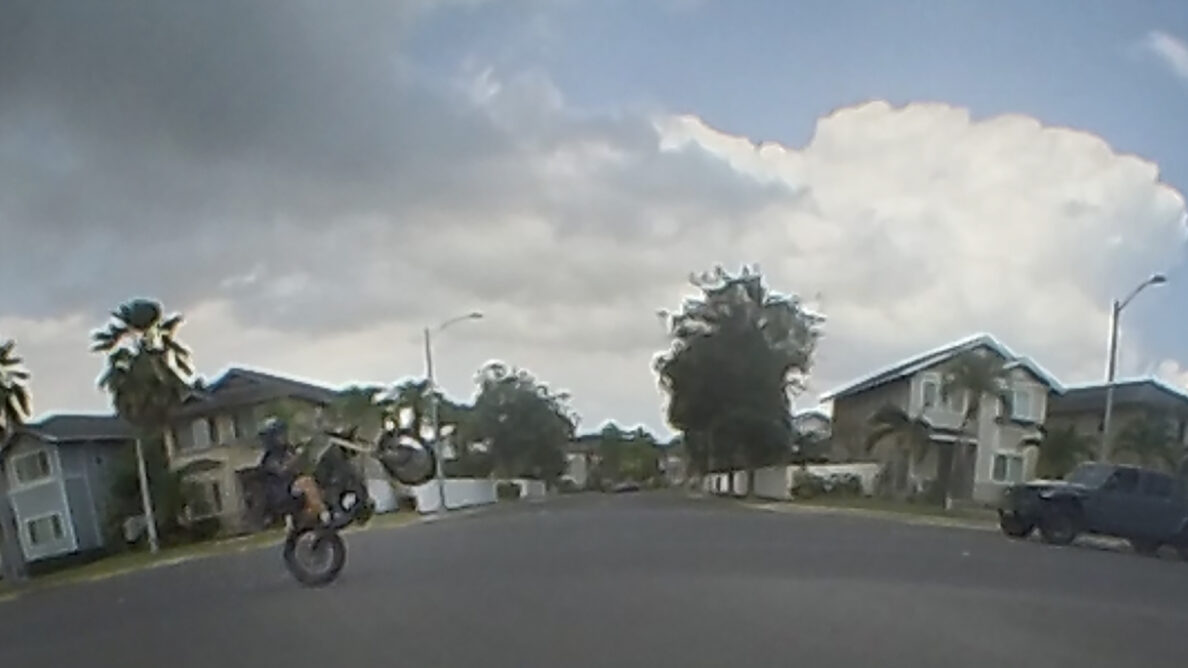
The proposed law would also tighten behavior rules on public roads and paths. Riders would be barred from performing tricks or reckless maneuvers, including wheelies, and certain unsafe riding practices would be prohibited outright. Mopeds and electric motorcycles would also be kept out of bike lanes under the legislation, a move cycling advocates have pushed for as bike lanes become busier.
For younger riders, the bill takes a more cautious approach. Children under 16 would not be allowed to operate Class 2 or Class 3 e-bikes unless they are directly supervised by an adult. All riders under 18 would be required to wear helmets. Backers of the measure argue that those provisions reflect the injury patterns first responders have been seeing, particularly among adolescents using faster or throttle-equipped electric bikes.
The issue has gained urgency after several high-profile crashes drew public attention in recent years. Hawaiʻi officials have pointed to fatal incidents involving young riders, along with a broader pattern of serious trauma cases, as evidence that the state needs clearer rules before the problem worsens further.
At the same time, lawmakers and advocates are trying to avoid treating all electric bikes as inherently dangerous. Transportation and cycling groups in Hawaiʻi have argued that properly regulated e-bikes can offer a practical, low-cost and lower-emission alternative to cars, particularly for commuting and short daily trips. They say the real problem lies in the lack of clarity between conventional e-bikes and heavier, faster machines that do not belong in the same category.
That distinction also became important after a similar statewide proposal was vetoed last year. The earlier version failed to become law after legal concerns were raised over how certain electric vehicles were defined. Supporters of the new bill say the latest draft was rewritten to address those concerns by more clearly separating e-bikes from other electric vehicles and by specifying where different devices may legally operate.
Honolulu has already moved ahead with some local restrictions. A city ordinance approved last year required helmets for minors, limited motor power for e-bikes and banned certain dangerous riding behavior. The new state legislation would build on that approach and create a more uniform set of rules across Hawaiʻi, reducing confusion for riders, parents and law enforcement.
Cycling advocates generally support the bill’s effort to create statewide clarity, though some have expressed concern about how age restrictions could affect teens who use e-bikes as a legitimate form of transportation. Still, many agree that clearer classification, better education and consistent enforcement are necessary as e-bike use expands.
The debate in Hawaiʻi reflects a broader national trend. As e-bikes become more common across the United States, states and cities are increasingly revisiting safety rules, rider age limits, helmet requirements and the line between bicycles and electric motorbikes. Hawaiʻi’s proposal fits squarely into that shift, with policymakers trying to encourage cleaner mobility options without allowing public streets and sidewalks to become less safe.
For now, the bill awaits final action from the governor. If it becomes law, Hawaiʻi would join a growing number of states that are updating their traffic codes to reflect the rapid rise of e-bikes while responding to mounting safety concerns. For riders and families, the message is becoming clearer: e-bikes are likely to remain part of Hawaiʻi’s transportation future, but with stricter rules meant to make that future safer for everyone.