



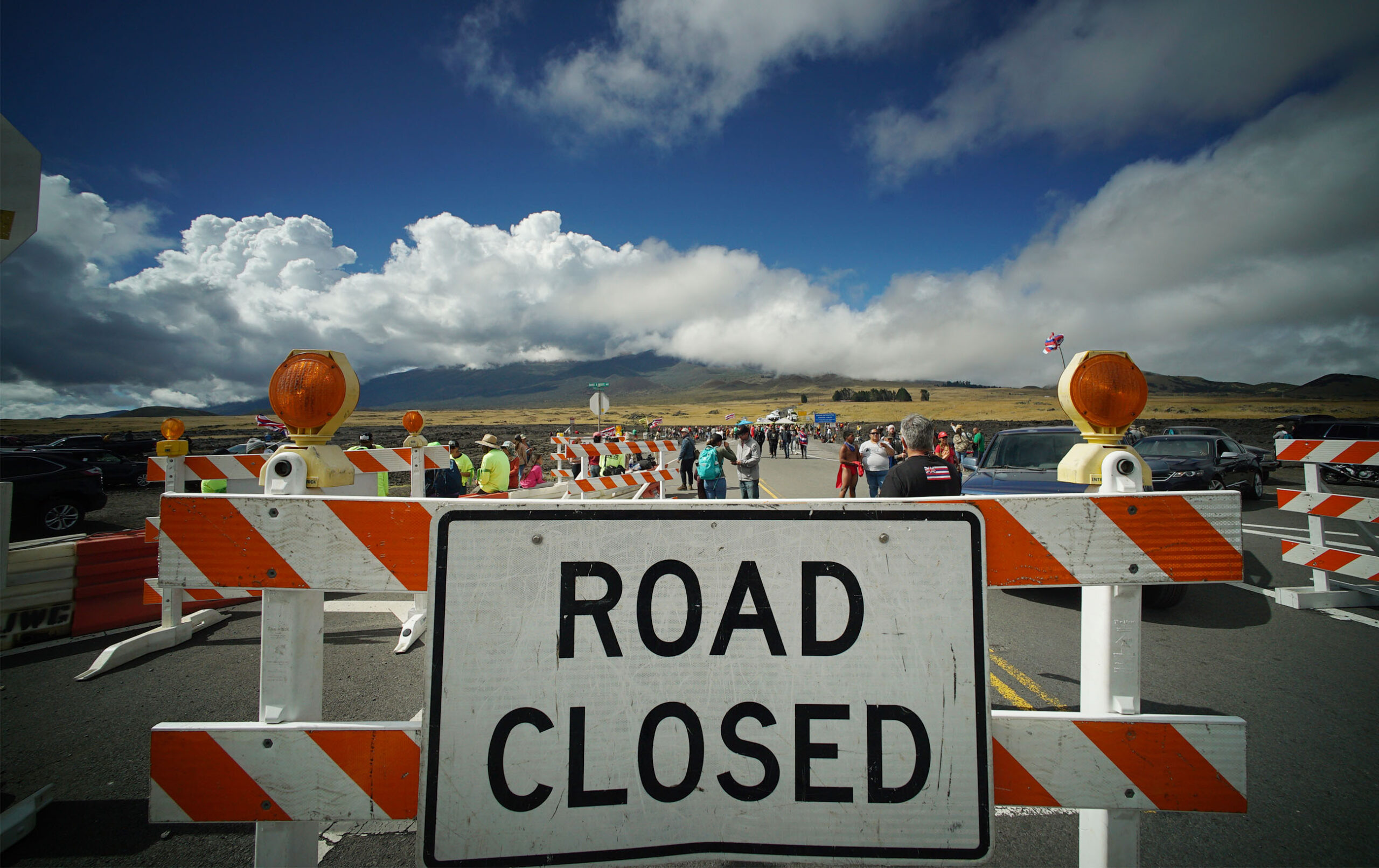
HILO, Hawaii — Hawaii’s Department of Hawaiian Home Lands is considering whether drivers heading up Mauna Kea should pay a toll, as state officials review two Native Hawaiian-led proposals that would use the road to fund cultural preservation, land restoration and visitor management on one of the islands’ most sensitive and contested landscapes.
The issue is now before the Hawaiian Homes Commission, which is reviewing separate plans tied to the first four miles of the Mauna Kea Access Road, a route that has become central to long-running debates over public access, Native Hawaiian stewardship and the future management of the mountain. While no toll amount has been set and no final decision has been made, the discussion marks a significant step toward turning road access into a source of funding for projects on and around the mountain.
One proposal comes from Waimea Nui Community Development Corp., which is linked to the Waimea Hawaiian homestead community. Its plan focuses on cultural education, stewardship and protection of significant sites. Under that concept, vehicles traveling toward the summit would pay an access fee, with revenue potentially used for trail restoration, visitor education and efforts to safeguard culturally important areas on Department of Hawaiian Home Lands property.
The Waimea-based proposal also envisions educational programs and a cultural center aimed at helping visitors better understand the significance of Mauna Kea. Supporters argue that stronger on-site education could reduce disrespectful behavior and improve protection for the area, which holds deep spiritual and historical meaning for many Native Hawaiians.
A competing proposal, backed by a group known as Koa Kiai, takes a more tourism-driven approach. That plan would pair tolls and parking fees with commercial activities such as astronomy tours, cultural tours, walking and biking experiences, and restoration-focused outings. The proposal also outlines a business model involving a for-profit tour operation alongside nonprofit work tied to reforestation, cultural education and monitoring.
According to figures presented to state officials, the Koa Kiai concept would require a sizable upfront investment but projects that tolls, parking and related activities could generate substantial annual revenue. The plan also includes ideas such as a food truck and gift shop, signaling a more commercial model than the community-based Waimea proposal.
Despite the competing visions, DHHL leadership has indicated it would rather see the two sides find common ground than move forward in conflict. Commission members have also signaled support for a collaborative outcome, especially after community outreach showed stronger support among beneficiaries for the Waimea-centered approach while still recognizing that the Koa Kiai proposal raised ideas around revenue generation.
The debate is not only about money. It also reflects a broader question over who should help shape access to Mauna Kea and how that access should be managed. DHHL officials have made clear that any future plan would require coordination with the Mauna Kea Stewardship and Oversight Authority and the University of Hawaii, both of which remain part of the mountain’s wider management structure.
That broader governance question became more urgent after a 2024 Hawaii Supreme Court ruling involving the Mauna Kea Access Road. The court found that the state had improperly treated the road as part of the state highway system and said the Department of Hawaiian Home Lands should not have given up control without proper consultation with beneficiaries. The ruling reinforced that the land beneath the road remains tied to the Hawaiian home lands trust and must be managed with those obligations in mind.
The road’s legal and political significance was already heightened by the 2019 protests against the proposed Thirty Meter Telescope, when access to the mountain became a flashpoint for Native Hawaiian rights, state authority and the future of development on Mauna Kea. That history still shapes how many residents view any proposal involving fees, road control or visitor limits.
For supporters of tolling, the idea is less about restricting access outright and more about creating a stable way to pay for stewardship. Managing visitors, restoring damaged areas, protecting cultural resources and funding education all require money, and backers say the road itself could help provide it. Critics, however, are likely to scrutinize how fees would be set, who would collect them, and whether commercialization could clash with the mountain’s cultural importance.
At this stage, the proposal remains preliminary. Key questions — including the toll rate, enforcement, revenue oversight and final management structure — have not been settled. State officials expect the matter to return to the Hawaiian Homes Commission for further discussion in the coming months, with the possibility of a more developed proposal later this year.
What is already clear is that Mauna Kea access is no longer being discussed only as a traffic or tourism issue. For DHHL and Native Hawaiian stakeholders, the road is increasingly being treated as part of a larger conversation about stewardship, self-determination and how the benefits from a sacred and heavily visited place should be managed for the future.