



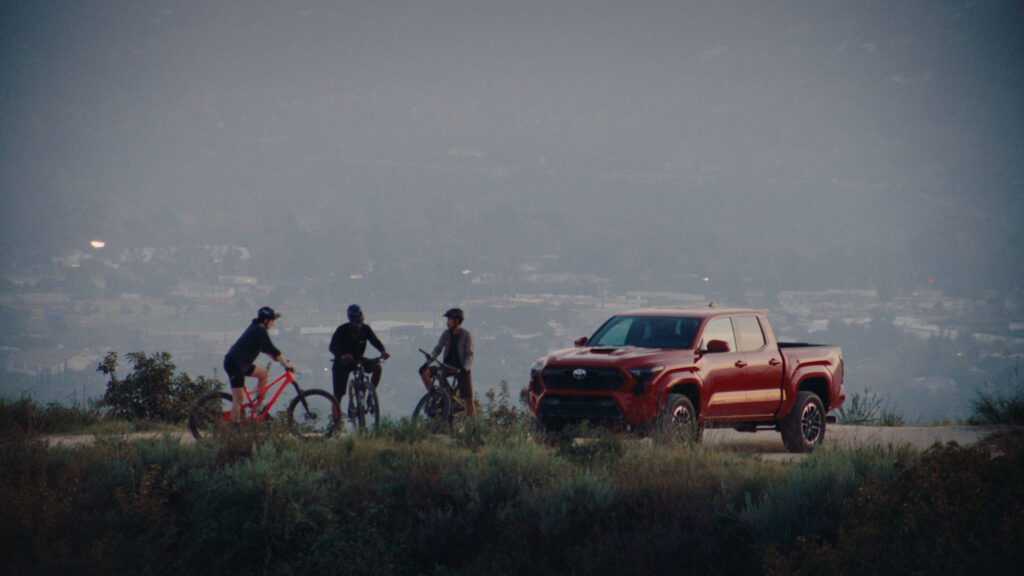
Toyota’s Tacoma is not just another popular vehicle in Hawaiʻi; it has become part of the islands’ everyday identity. In a recent commentary, writer Makana Eyre examines why the midsize pickup continues to dominate local roads, arguing that its grip on Hawaiʻi goes far beyond practicality. Reliability, resale value and utility all matter, but Eyre suggests the Tacoma’s real power lies in something less measurable: the way it fits the local lifestyle, memory and self-image.
That argument lands at a time when the numbers continue to support the Tacoma’s remarkable hold on the Hawaiʻi market. The pickup has led vehicle sales in the state for more than two decades, an unusually long run in an industry where trends often change quickly. Even in 2024, when registrations fell from the previous year, the Tacoma still finished as Hawaiʻi’s top-selling vehicle model, holding a 7.4% share of the market. In the small pickup segment, Toyota has maintained an even stronger position, underscoring just how deeply the model is rooted in local consumer habits.
Eyre’s central point is that the Tacoma’s popularity cannot be explained by logic alone. On paper, many buyers could choose smaller, cheaper or more fuel-efficient vehicles. Some families might find SUVs or sedans more practical for daily school runs and city driving. Yet the Tacoma keeps winning. For Eyre, that says something important about the difference between what people need from a vehicle and what they want it to represent.
That representation matters in Hawaiʻi, where vehicles often serve as an extension of lifestyle. A Tacoma suggests readiness. It signals that the driver can head to the beach, haul boards, carry tools, navigate rough roads or help a friend pull a stuck vehicle from mud or sand. Whether every owner regularly does those things is almost beside the point. The image of capability has become part of the truck’s appeal, and in Hawaiʻi that image resonates strongly.
The Tacoma’s long-standing popularity is also tied to local trust. For many island drivers, the truck has built a reputation for durability and easy maintenance. In a state where distance from the mainland can affect parts, service and replacement costs, reliability carries added weight. Buyers tend to favor vehicles that can last and that mechanics understand well. The Tacoma benefits from years of familiarity in that environment, making it not only desirable but also reassuring.
Still, Eyre’s reflection goes deeper than market logic. He describes the Tacoma as a vehicle wrapped up in nostalgia, particularly for people who grew up around older Japanese pickups and simple utility vehicles that were once common across the islands. In that sense, the Tacoma connects modern drivers to an earlier version of Hawaiʻi—one that felt more rural, more hands-on and closer to the land. Even newer, high-tech Tacoma models can carry that emotional echo.
That may help explain why the truck has held on when other once-fashionable vehicles faded. Automotive history is full of short-lived obsessions. Hawaiʻi, like the mainland, has seen drivers embrace and then move on from boxy compacts, oversized SUVs and other attention-grabbing models. The Tacoma, by contrast, has proven unusually durable not only as a machine but as a cultural symbol. Its appeal has outlasted changing styles, economic cycles and shifting consumer preferences.
Toyota itself has clearly recognized that special relationship. When the company unveiled the fourth-generation 2024 Tacoma, it chose Hawaiʻi for the global debut, a decision that spoke volumes about the truck’s place in the islands. Executives openly acknowledged the model’s dominance there, while local branding around the launch leaned into Hawaiʻi’s outdoor culture and emotional connection to the vehicle. Carmakers do not stage major launches in places that are merely good sales markets; they do it where a product has cultural meaning.
In many ways, the Tacoma has become part of Hawaiʻi’s visual landscape. It is seen in neighborhood driveways, shopping center parking lots, beachside pull-ins and rural back roads. Owners customize them in countless ways, from lift kits and larger tires to surf racks, toolboxes and dark window tints. That customization culture only strengthens the bond between truck and owner. The Tacoma is not just bought; it is shaped, personalized and absorbed into daily life.
Eyre is careful, however, not to romanticize the phenomenon without question. He notes that big trucks also raise legitimate concerns. Across the United States, larger vehicles have faced criticism over pedestrian safety, especially for children, as well as for poor fuel economy and broader environmental costs. Those issues apply in Hawaiʻi too, where land is limited, roads can be narrow and climate concerns carry particular urgency. The Tacoma’s emotional appeal may be real, but that does not automatically make it the best answer for every household or every public policy challenge.
That tension gives Eyre’s commentary its strength. Rather than simply celebrate the Tacoma, he asks readers to consider why people become attached to certain vehicles in the first place. His answer is not that Hawaiʻi drivers are irrational, but that consumer choices are rarely driven by cold facts alone. Vehicles are bound up with memory, aspiration, place and identity. In Hawaiʻi, the Tacoma appears to sit at the intersection of all four.
There is also a broader American angle to the story. Across the U.S., pickup trucks have long been associated with independence, work and ruggedness. But in Hawaiʻi, that symbolism takes on a more localized form. The Tacoma is smaller than many full-size mainland trucks, making it better suited to island roads and tighter urban spaces. It offers the pickup identity without some of the size-related burdens that come with larger models. That balance may be one reason it has become the islands’ pickup of choice.
The numbers suggest that, for now, its position remains secure. Even as electric vehicles gain attention and crossovers continue to grow in popularity, the Tacoma still holds a lead that many competitors have failed to crack. Tesla’s Model Y and Toyota’s own RAV4 have posted strong performances in Hawaiʻi, showing that buyer preferences are evolving. But neither has yet displaced the Tacoma from the top spot.
What Eyre ultimately captures is that Hawaiʻi’s relationship with the Tacoma is not just about transport. It is about familiarity, confidence and a sense of belonging. For some drivers, the truck is practical. For others, it is aspirational. For many, it is both at once. That mix is difficult for competitors to replicate and even harder for data alone to explain.
As Hawaiʻi’s auto market gradually changes, the Tacoma may one day face a more serious challenge from hybrids, EVs or smaller lifestyle vehicles. But for now, its place in the islands remains unusually strong. Makana Eyre’s assessment is persuasive precisely because it looks beyond specs and sales charts. In Hawaiʻi, the Tacoma is not simply a top-selling truck. It is a vehicle that has become woven into the culture, and that helps explain why its hold on the islands has lasted so long.